


The BNQ Tokenomics, A Deflationary Token
2026-03-06 06:28:00
Deflationary Mechanism: Engineering Supply Reduction
Hashrate Distribution and Adjustment
Mining Levels: Growth Pathways in BNQ Mining
Why Should You Explore BNQ Mining?
Frequently Asked Questions (FAQs)
Powering the BitNasdaq Ecosystem: The BNQ Tokenomics
In the crypto landscape, token design has become the backbone of the blockchain ecosystem. The game has evolved from just supply numbers to defining value flow in the ecosystem. Rather than relying on ongoing inflationary emissions to sustain itself, BitNasdaq developed a fundamentally different approach: The Extreme Deflationary Economic Model. BNQ is the native token of BitNasdaq, deliberately designed to follow a deflationary model integrating scarcity, participation, and long-term sustainability.
Rather than expanding over time, BNQ has been engineered to decrease circulating supply while maintaining functional utility and ecosystem growth. It is not just a token; it is an economic system. BitNasdaq has recently updated the tokenomics metrics for better expansion, ecosystem development, user participation, and better incentives. Read the article below to find out more about the updated BNQ tokenomics: structure, allocation, deflationary mechanism, rewards, and more!
BNQ: The Foundation
BNQ Issuance and Supply
BNQ is issued on the Ethereum blockchain following the ERC-20 token standard, ensuring compatibility with the broader Ethereum infrastructure. In the new update, it carries a total supply of 100,000,000,000 tokens, with 8 decimal places, and an initial issue price of $0.0025 USD. These parameters are the economic foundation of the token. While other inflationary models increase supply over time, the BNQ total supply was fixed at issuance. On the other hand, the circulating supply has been designed to decrease as part of the built-in burn-to-mine mechanism.
Outdated BNQ Allocation
The allocation was as follows:
Public Sale: 40.0%
Founding Team: 20.0%
BTF- Investor Protection Fund: 10.0%
KOLS: 10.0%
Referral: 10.0%
Airdrop: 10.0%
The New Token Distribution Mechanism
BNQ distribution is now structured to improve balanced market access, ecosystem development, and incentive mechanisms. The structure has been architectured not only for trading but also for expansion and risk management.
The total supply of the BNQ Tokens is 100,000,000,000, which has been divided into two major portions which are:
55% for Mining: Over half of the tokens are now available for your reward! 55% of the BNQ is ready for you to mine.
44% for Burning: Tokens are now burned to gain Hashrate for mining, driving scarcity and boosting value. Burned tokens will not circulate in the secondary market.
1% Initial Circulation: Ensuring fair and sustainable tokenomics from the start. Totalling 45% just for burn.
Allocation of burned BNQ
Now, from within this 45% of the total BNQ burned, the burn reward will be reused within the BitNasdaq ecosystem in the following distribution:
25% for Ecological Development: This portion of the token cannot be traded on the market as a native token; instead, it is sent directly to a black hole address to be exchanged for hashrate, which is then used as a reward to support ecological development.
10% for Community Construction: This portion of the token cannot be traded on the market as a native token; instead, it is sent directly to a black hole address to be exchanged for hashrate, which is then used as a reward to support community development.
10% for Early Investment: Of this, 1% of the tokens will circulate in the market as native tokens, specifically for investors and supporters to become early builders of the ecosystem. The remaining 9% can only be used for destruction to obtain the most original first mining hashrate.
Each allocation category serves a distinct purpose in the ecosystem. A significant portion of the tokens is accessible to the public to ensure broad participation, while also reserving tokens for long-term ecosystem development, expansion, referral incentives, and safeguarding mechanisms like the Investor Protection Fund (BTF).
Deflationary Mechanism: Engineering Supply Reduction
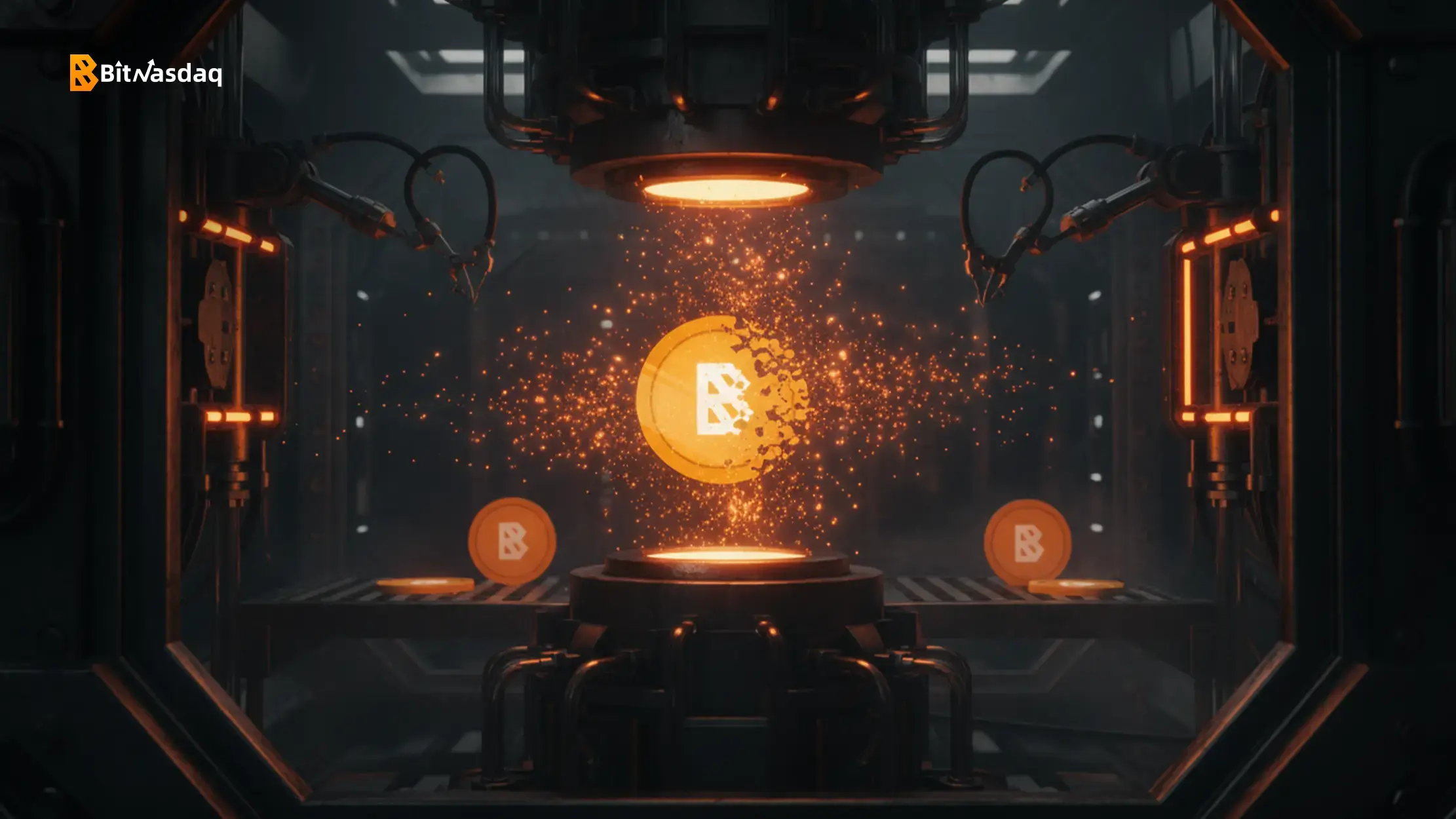
At the core, the extreme deflationary economic model is the defining feature of the BNQ Tokenomics. In simple words, the BNQ token supply dynamics were designed to move only in the downward direction since inception.
The Initial Burn
According to the official framework, scarcity was established from the start, with 44% of the total tokens burned at the initial stage, significantly reducing effective supply. Rather than gradually introducing scarcity, a burn of this magnitude reduces upfront supply early in the lifecycle and reinforces it through ongoing mechanisms over time.
And guess what? This is only the first layer of the deflationary structure.
BNQ Mining
The continuous burn mechanism is the second layer of the deflationary structure that operates through BNQ Mining: permanent removal of tokens from the circulation when users participate. It operates on the burn-to-mine mechanism powered by Proof of Contribution (POC), which means:
When a user participates in BNQ Mining, BNQ tokens are burned and sent to a designated “black hole address,” which cannot be recovered or reintroduced into circulation, thereby reducing supply. You must be wondering what it has to do with users? Well, users receive the Hashrate Bonus as Mining Rewards. These rewards are distributed daily based on each participant's contribution to the ecosystem, creating a feedback loop:
Miners burn BNQ
BNQ supply decreases
Hashrate is generated
Hashrate rewards are distributed proportionally
Did You Know? Instead of relying on traditional hardware, POC doesn’t require physical infrastructure and makes the entire process energy efficient!
Scheduled Output Reduction
The third layer of the deflationary structure integrates a structured emission decay model to slow supply expansion over time. Every 180 days, the mining output decreases by 5%, gradually limiting new tokens distributed through mining rewards. This process introduces predictability into the token economy while reinforcing long-term scarcity.
In short, this model combines three layers of deflation:
A significant initial burn (44%)
Continuous burn through BNQ Mining
Scheduled mining output reduction (every 180 days)
Hashrate Distribution and Adjustment
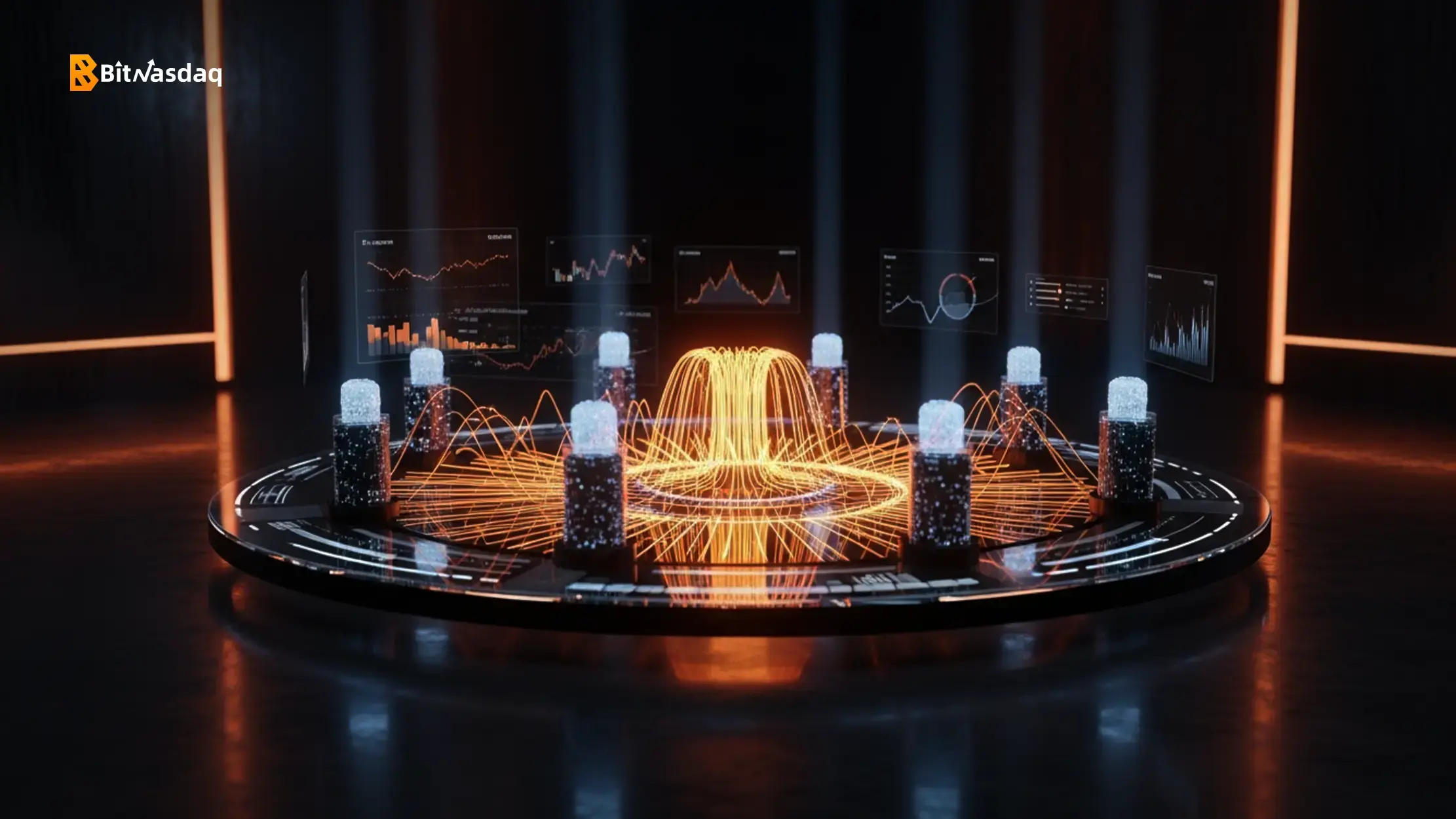
The BNQ Mining system incorporates dynamic adjustments based on market conditions to ensure fairness and sustainability within the ecosystem. The Hashrate is designed to adapt automatically, according to the BNQ market price, supporting balanced reward distribution. This structure emphasizes user participation over hardware ownership.
Click here to learn how to buy hashrate.
Mining Levels: Growth Pathways in BNQ Mining
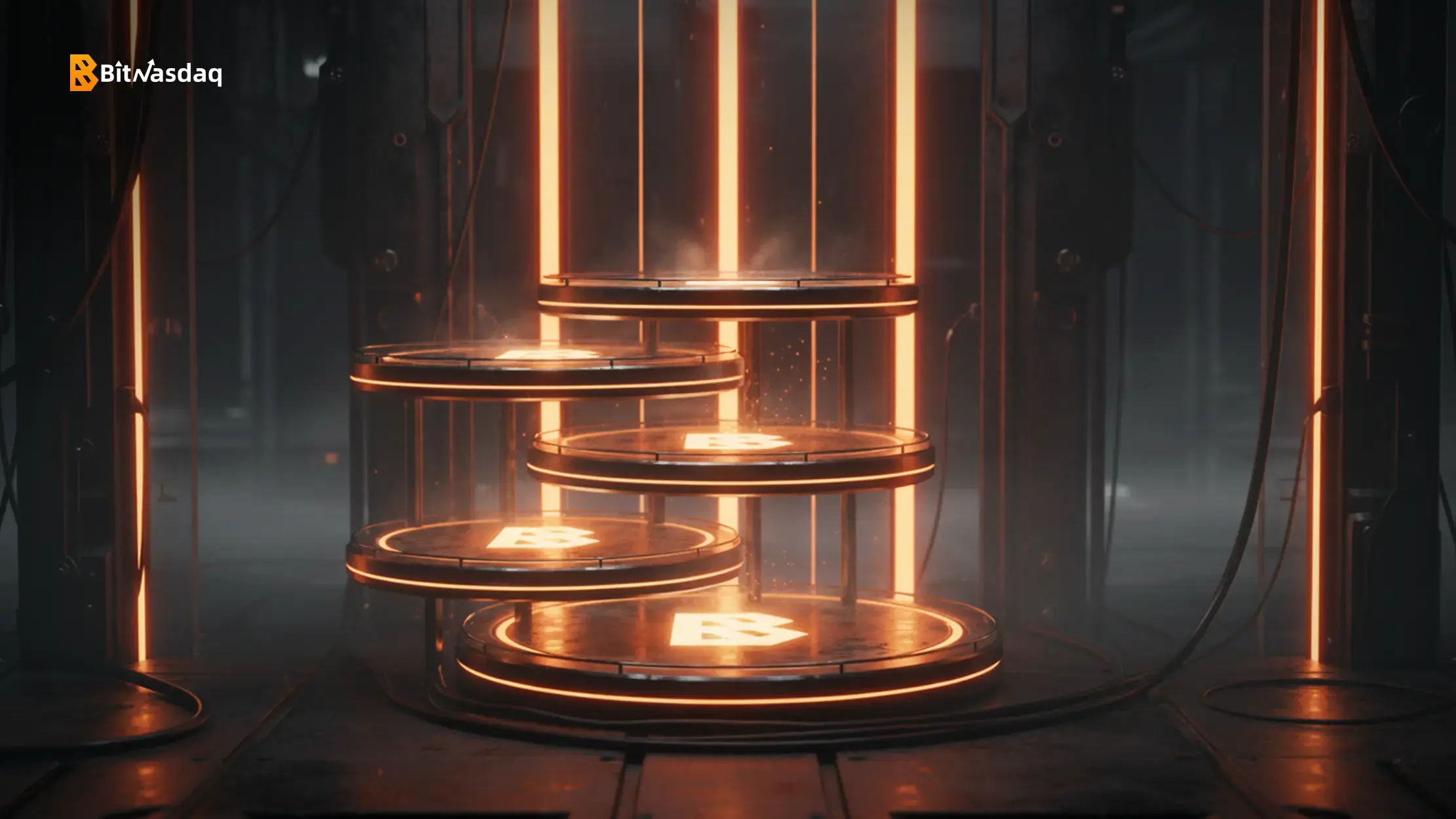
To ensure BNQ Mining is interesting and not a flat system, BitNasdaq introduced Mining Levels. Users can advance through mining levels, beginning as a Test Miner and progressing toward higher-level mining pools like Super Pool Miner. The levels are:
Test Miner
Ordinary Miner Level
Hive Pool Miner Level
Super Pool Miner Level
Each level unlocks greater potential rewards like Hashrate bonuses or Mining Machines and increases ecosystem participation. This structure has been designed to incentivize continued engagement rather than one-time participation, rewarding continuous contribution. Learn BNQ Mining with us. Click Here.
Why Should You Explore BNQ Mining?
The deflationary economic model is not just about BitNasdaq’s identity but also integrates functional value into the ecosystem, which offers more to its users than you would think! BitNasdaq ensures that the BNQ Token is not just burned and mined; it is actively used within the operational network of the platform, both as a utility asset and participation mechanism.
The BNQ Token serves multiple use cases within the ecosystem:
Reducing trading fees on the platform
High APY staking opportunities
Participation in governance mechanisms
Referral rewards and incentives for ecosystem contribution
Airdrop participation
As a result, the core mechanism gets integrated into operational and participatory activities within the ecosystem.
Conclusion
The unique extreme deflationary model is the first of its kind in the blockchain world and positions BNQ as a central component in BitNasdaq’s broader development trajectory. It represents a deliberate shift from traditional inflationary mechanics towards a participation-based deflationary system. The system has been designed to support sustainability through deflation. The allocation structure supports ecosystem growth, investor protection, referral incentives, and ecosystem development sustainability.
As the platform continues to expand its ecosystem features, the tokens' roles in mining, governance, and participation remain structurally embedded. BNQ’s value mechanics are based on internal platform activity rather than relying on market hype. Let us know about the new updated structure in the comments section.
Frequently Asked Questions (FAQs)
Why is BNQ issued on the Ethereum blockchain?
The BNQ Token follows the ERC-20 token standard on the Ethereum blockchain, ensuring compatibility with the broader Ethereum ecosystem. BNQ can operate using widely accepted infrastructure and wallets.
What is the official contract address of BNQ?
The official contract address of BNQ on Ethereum is:
0xEAA78305C19A292e5c141108f0880333A840a2bc
You can easily use this address to verify the BNQ Token on the Ethereum network with full transparency of token supply.
Are the burned tokens reused in the ecosystem?
No, the burned tokens are sent to a designated “black hole address” and permanently removed from circulation. However, the hashrate generated as a result of burning is used for ecological development, community construction, and early investment.
Why has the tokenomics model been updated?
BNQ Tokenomics has been updated to better support the long-term growth of the ecosystem, community involvement, and global expansion of the platform.
How does the updated model benefit the community?
The updated tokenomics focuses more on community participation and ecosystem development. By allocating 10% for community construction and 25% for ecological development, the new framework encourages stronger engagement from users, contributors, and early supporters within the ecosystem.
 Share
Share
 Like
Like
 Dislike

