


What to expect from crypto in 2026
2026-02-23 07:00:17

Exchange Traded Funds (EFTs) to Fallout or Explode?
Institutional Adoption to Deepen?
Regulation to Bring More Clarity
Stablecoins at the Core of Crypto
Zero-Knowledge Tech for Privacy?
Integration of Web3 with Traditional Tech
Frequently Asked Questions (FAQs)
The Crypto market saw widespread acceptance in 2025 for the first time, and as we move towards 2026, it is entering into a more mature phase of adoption driven by traditional finance integration and utility. This new era is expected to be driven by high-growth and evolution from a speculation-based to a substantially regulated market.
BitNasdaq, the best cryptocurrency platform, has also entered a new phase of growth with BNQ mining and the hashrate buyback pool, to give back to the blockchain ecosystem sustainably. While predictions about what to expect from crypto vary in terms of trading; from Bitcoin prices to whether Fortune 500 companies will hold digital assets to new crypto EFTs, we will be discussing which narratives are expected to shape the year 2026 for crypto.
Whats Next for Bitcoin

Bitcoin continues to top the ecosystem as a flagship cryptocurrency even in 2026; its growth will be different from the previous years. It is expected that Bitcoins position will transition from the long-standing ‘Digital Gold towards institutional adoption. After witnessing explosive gains in 2025, reaching above $125,000 and then retreating near $88,000in 2025, this year will be more about structural growth.
Analysts predict that:
Sustained institutional capital inflows and financial assets that will attach real-world assets to BTC holdings
BTC might cross $150,000, with bull cases up to $190,000- 250,000 depending on EFT inflows and institutional interest
Expansion of Bitcoin in DeFi applications
More use of BTC in treasury reserve strategies
All of these predictions depend on institutional maturity, regulatory policies, and structural adoption of BTC in 2026.
Exchange Traded Funds (EFTs) to Fallout or Explode?
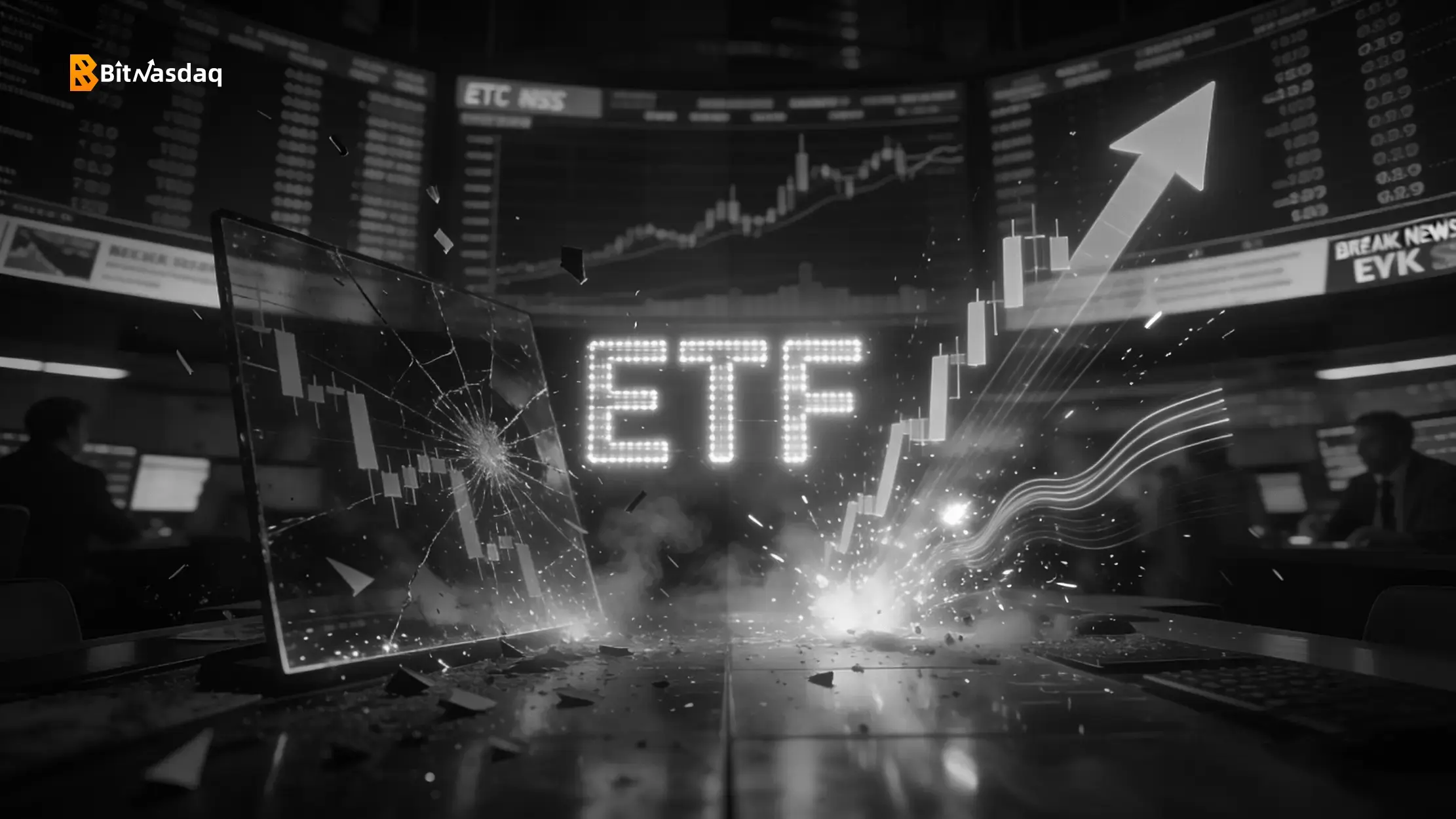
The year 2026 can be a milestone for EFTs, as some analysts suggest that more than 100 new EFTs may launch this year, becoming a major gateway for mainstream investors connecting traditional finance to DeFi.
EFTs allow regulated access to institutions so traditional financial portfolios can gain exposure to the crypto market
EFTs can offer legitimate market infrastructure
EFTs have already delivered major capital injections in early 2026, i.e., $844 million
However, the crypto landscape is ever diversifying, with more thematic and niche strategies always being introduced; insufficient investor demand can result in EFT fallout.
Institutional Adoption to Deepen?

One of the most trending topics of 2026 in crypto won't be about the token prices, but who is adopting crypto. Analysts suggest that by the end of 2026, around 50% of the Fortune 500 companies will have a formal share of assets in the crypto world.
These could be
Crypto holdings
Tokenized assets
Institutional treasuries
Payments
Other financial instruments.
Tokenization of bonds, real estate, and real-world assets will add a new financial layer to institutional adoption, bringing transparency, liquidity, and market efficiency.
Regulation to Bring More Clarity
2025 was the year when regulations for crypto started taking shape. In 2026, it is expected that regulatory clarity, in addition to just making regulations, will become one of the biggest catalysts moving towards the next phase of growth. Clearer rules revolving around stablecoins, asset digitalization, custody, and blockchain are expected in the U.S., Europe, and the UAE. While most countries remain cautious, these regulatory frameworks will reduce barriers to entry for banks, institutions, and other companies. A predictable environment can result in trillions of dollars of investment by institutions and companies.
Stablecoins at the Core of Crypto
Stablecoins that were once dismissed as simple trading utilities are expected to become a core infrastructure for global settlement in 2026. Stablecoin based blockchain systems are being revolutionized to lower the cost of real-time transactions. Traditional financial institutions, banking systems, and payment systems are expected to use stablecoins in the future for:
Payments and transactions
Payroll functions
Cross-border transactions
Institutional settlements
Zero-Knowledge Tech for Privacy?

Privacy has now become an important element in institutional adoption in crypto, where the Zero-Knowledge Proofs (ZKPs) have broadened their applications from scaling solutions to:
Identity verification without data exposure
Confidential DeFi
Institutional protection
ZKP tools allow users to meet a certain criterion (age limit or credit score), keeping their private data safe. As a result of this compliance-friendly privacy, users feel safer interacting with DeFi; a renewed interest in crypto. In 2026, the demand for ZKPs will increase as institutions start participating in crypto without exposing their sensitive data or trading strategies on public ledgers.
Utility to Drive DeFi?
Crypto isnt about BTC or speculative trading anymore. With other crypto applications like Ethereum, DeFi, and Web3 gaining momentum, utility has now become the new currency of value. Real-world uses like payments, real estate, gaming economies, and tokenized real-world assets will likely shift the flow of capital in the crypto market. In 2026, the crypto ecosystem is expected to reward projects that are:
Sustainable
Real-world uses
Secure long-term capital
Solve real-world problems
Are strong and viable
Integration of Web3 with Traditional Tech
With the seamless integration of Web3 beyond financial systems, 2026 might be the year when Web3 becomes functionally invisible for everyday users through FinTech apps, payment/cross-border transactions, and much more. Additionally, the rise of crypto cards, both custodial and non-custodial debit and credit cards, will allow users to trade on-chain assets locally and internationally through Visa/Mastercard terminals.
What 2026 Means for BNQ?
The crypto ecosystem in 2026 will see a powerful shift from speculative based market to a utility and participation rewarding ecosystem, and BNQ sits at the heart of it. BNQ will likely gain relevance as its role in the BNQ ecosystem is tied closely to BNQ mining, hashrate contribution, and incentive distribution. In 2026, it is expected:
Incentive programs to increase mining participation
Hashrate based rewards growing awareness
Network expansion and focus on ecosystem growth rather than one-time activity
Controlled token circulation with hashrate buyback mechanism
Stronger security and KYC verification systems
Sustainable ecosystem growth with a deflationary model
2026 will be less about rapid price movement and more about steady adoption, sustainable tokenization, real-world asset digitization, utilization, and regulation policies. While market volatility will not disappear, stability, structure, and institutional integration will increase value and economic sense in the crypto ecosystem.
2026 will be less chaotic and more predictable.
Frequently Asked Questions (FAQs)
Will crypto remain relevant in 2026?
Yes, Crypto will not only remain relevant but also move towards maturation with institutional adoption, integration in traditional finance, clearer regulatory frameworks, and tokenization of real-world assets
Will institutional integration bring a significant impact?
Yes, institutional integration will result in stronger regulations, tokenization of real-world assets, use of blockchain technology for payments, cross-border finance, settlements, and asset management, which will also enhance security and privacy of the overall ecosystem.
Why is Zero-Knowledge Privacy gaining traction in crypto?
As more institutions adopt DeFi and crypto, it is important that their sensitive information, trading strategies, balances and customer information remain private and secure. Zero-Knowledge Privacy is one way to protect all of this data.
What will crypto bring to everyday users in 2026?
In 2026, everyday users can expect faster transactions, cross-border remittances, stronger privacy, transparency, more trusted platforms, lower transaction costs, and overall a wider adoption of crypto.
 Share
Share
 Like
Like
 Dislike

